A great game night is not about owning the most games. It is about picking the right three, feeding people things that survive being held in one hand, and knowing when to stop. Here is the playbook we use for our own tables.
Get the guest count right
Four to eight people is the sweet spot for almost every party card game. Below four, most social games lose their chaos; above eight, turns take too long and phones come out. If you are expecting a crowd, plan to split into two tables rather than one giant circle — two loud tables beat one bored one every time.
Food that respects the cards
Skip anything that needs two hands or leaves grease. Bowls of things — popcorn, pretzels, grapes — beat plates of things. Put drinks on a side table, not the play surface: the first spilled cup always finds the deck. And a pitcher of water next to the good stuff is not just responsible, it keeps the night going longer.
Plan a three-act arc
The best nights have a shape: an opener everyone can join mid-conversation, a main event with real momentum, and a closer that winds things down while people still want more.
- The opener: something with zero rules overhead, dealt while people are still arriving and snacking.
- The main event: your loudest, most interactive game, played when the whole table is warmed up.
- The closer: shorter rounds, lower stakes — something people can drop out of gracefully as the night ends.
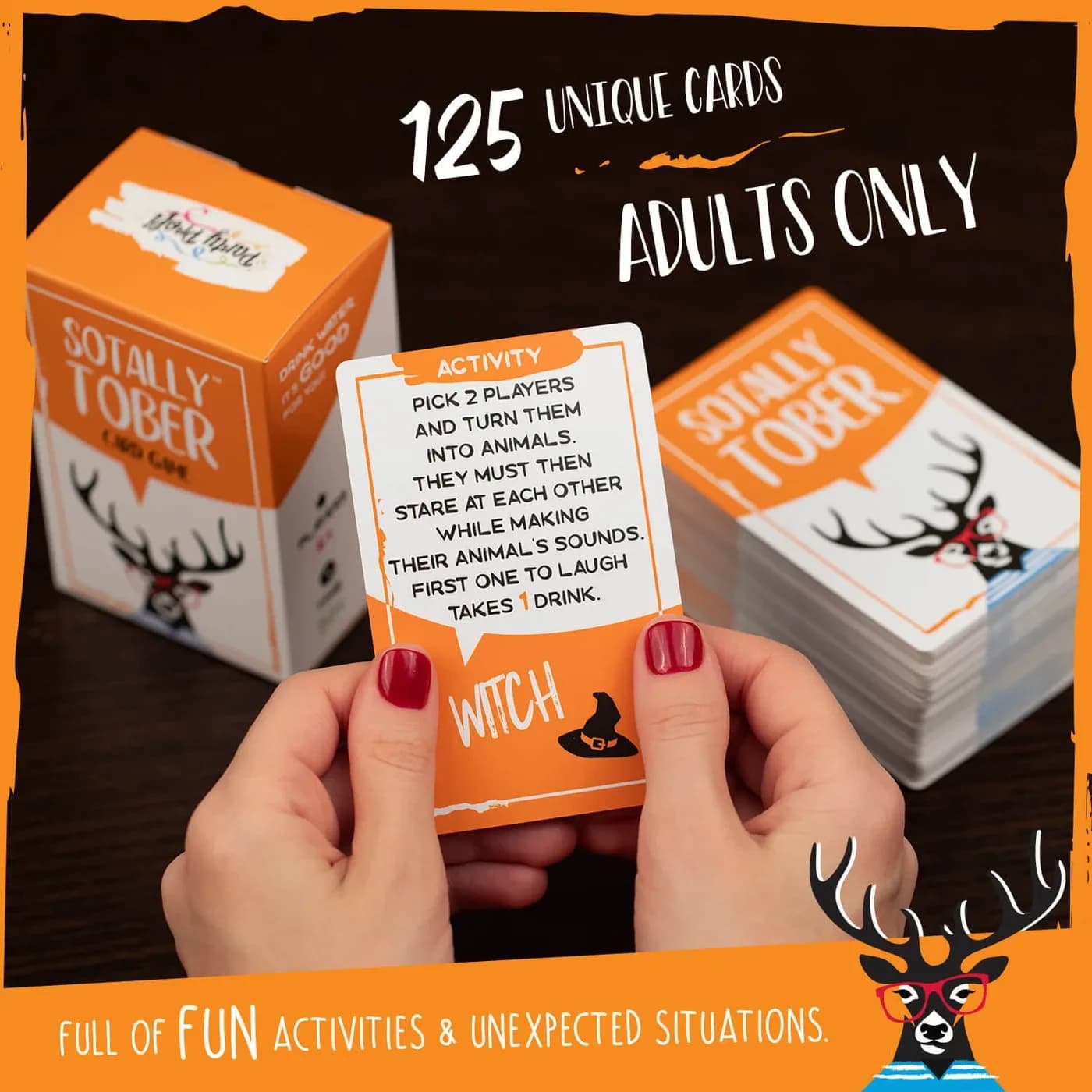
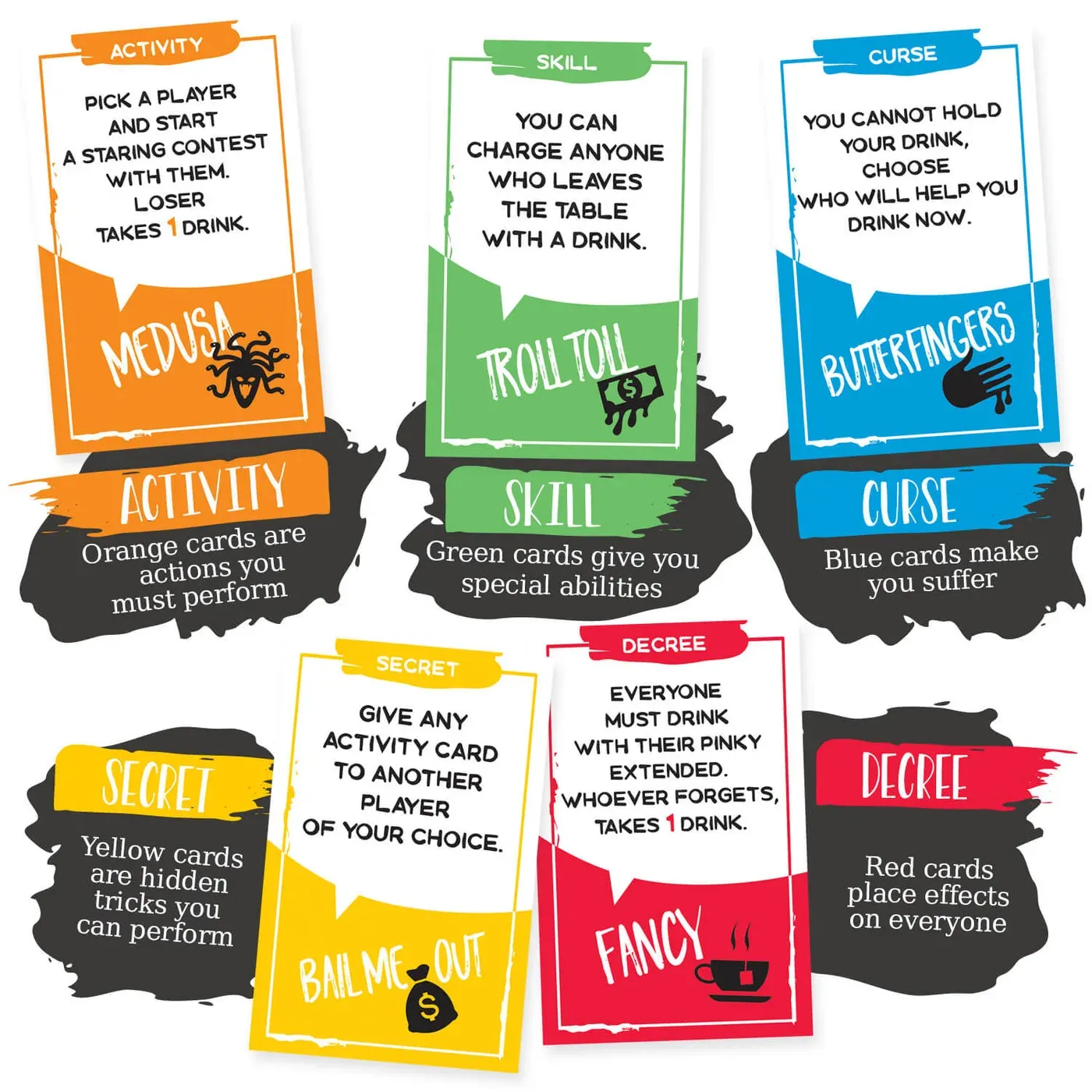
For an adults-only table, our main event is not a mystery: it is the game we built for exactly this slot.
Read the room, not the rulebook
House rules are not cheating — they are hosting. If a rule slows your table down, drop it. If a card asks more than someone wants to give, the answer in every game we make is the same: nobody is ever forced to do anything. The rules sheet in Sotally Tober says it outright, and it applies to any game night worth hosting.
For mixed-age tables, swap the main event for something everyone can shout about together — a ranting game scratches the same itch with none of the drinks.
End on a high note
Stop one round earlier than you think you should. The goal is not to finish the deck; it is for someone to say “same time next month?” on the way out. That is the whole win condition of hosting.